Posts

Image
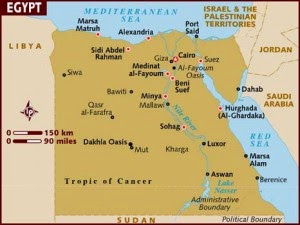
Seeing is believing Sukkah 51 In its list of superlatives (the greatest party, greatest building, etc) our Gemara includes the Great Synagogue in Alexandria: “if you have not seen the diploston of Alexandria in Egypt, you have not seen the honor/glory of Israel.” We then have a fabulous, hyperbolic description of a synagogue that could hold over one million inhabitants and that had to use flags in order to signal to the crowds when to say amen. My favorite detail in the story is how the people sat according to their professions, so that when a poor stranger arrived, he would go directly to his profession’s section and get help and job tips. What was the community of Alexandria that it had such an amazing edifice? Alexandria was one of the major cities of the ancient world and today it is still the second largest city in Egypt. Situated on the Meditteranean: Map: Esoteric Quest website it was ideally located for trade. One of the Seven Wonders of the ancient world, ...
Image
A Queenly Sukkah Sukkah 2 Hello Masechet Sukkah! There are many fascinating connections to Eretz Yisrael in this masechet, we will start with the unusual personality whose sukkah is featured here at the beginning: Queen Helene הלני המלכה . Her sukkah was over twenty amot high (more than ten meters, quite a structure) and yet the rabbis visited her in it and seemingly allowed her and her sons to use it. Who is Queen Helene? She appears in a number of places in the Gemara and Josephus, as a wealthy, generous and religious woman. She donates a chandelier to the Bet HaMikdash (Yoma 37) feeds the poor during a year of famine (Josephus) and even becomes a Nazirite for seven years to fulfill a vow she made when her son went to war (Nazir 19b). Josephus also mentions her palace in the City of David and her massive tomb north of the city, which is known today as the Tombs of the Kings. (a 19 th century picture of the tomb, courtesy of Wikipedia) The most fascinating fact ...
Image
Jericho Journey   Yoma 39 Mosaic floor of the sixth century “Shalom al Yisrael” synagogue (Photo credit: jewishjericho.org.il) The smell of the incense would make goats sneeze in Jericho . . . While this is definitely the most amusing connection between Jericho and the Bet HaMikdash, it is hardly the only one. On our page alone we hear about how in Jericho you could hear the sound of the Kohen Gadol saying God’s name in the vidui, you could hear the sound of the door hinges of the heichal and the smell of incense traveled so far that women in Jericho used it instead of perfume! In other place in the Gemara we hear of other connections between Jericho and Jerusalem : Jericho dates were the only dates worthy to be brought for Bikkurim, many priests lived in Jericho and it served as a base for aliya laregel and similar stories. (photo credit: Ferrell Jenkins) Leaving aside the Gemara’s hyperbole (maybe goats have very sensitive noses?), the point here ...
Image
Nicanor who made the gates . .  . Yoma 37 In today's daf we have a list of important donors to the Temple. One of the most famous is Nicanor of Alexandria, who donated beautiful gates. The dramatic story of their arrival in Jerusalem only appears on tomorrow's page, have patience. But Barnea Selavan pointed me in the direction of the today's post. In 1902 in Jerusalem an ancient burial cave was discovered on Mount Scopus in Jerusalem. The cave was significant because of the ossuary (burial box for bones) it contained. Many ossuaries have been discovered in Jerusalem from Second Temple times but the ones with inscriptions are the most rare and the most valuable. This one has an inscription in Greek and one in Hebrew. The Hebrew only contains two names: Nicanor Alexa. The Greek is more expansive (translated quote from Wikipedia   http://en.wikipedia.org/wiki/Cave_of_Nicanor , which also has some nice pictures): "the bones of the family of Nicanor the Alexa...
Image
Can Water Flow Uphill?   Yoma 31 In the context of the Kohen Gadol’s preparations for the avoda, we hear about his requirement to use the mikveh numerous times during Yom Kippur.  Abaye mentions that the water for the mikveh above Shaar haMayim comes from Ein Eitam עין עיתם . This spring must be 23 amot higher than the floor of the azara because  the gates in the azara are twenty amot high, plus another three amot for the depth of the mikveh. I wanted to write a simple post about the identity of Ein Eitam and its connection to the water supply of Har haBayit. However, the more I researched, the more murky the topic became. But I will set out a few ideas and suggestions here, with further reading for those who are interested. Our first question is where is Ein Eitam? It is mentioned as the source for the mikveh here and in the Yerushalmi (Yoma 3:8) as the source for the waters in the כיור , brought by an aqueduct.  Tanakh does not have a reference to a sp...

Why was the Temple destroyed?

Image
Massechet Yoma, Daf 9  + Throughout Massechet Yoma, we get a glimpse into life with the Beit Hamikdash, the holy Temple, intact. On daf 9, for example, we're told the reasons for the destruction of Jerusalem's holiest place. We read that the first Temple was destroyed because of three cardinal sins - idolatry, adultery and murder. The prophets warn the people of their imminent demise because of these actions - see Jeremiah, chapter 9: "So that I might leave my peopel... for they are all adulterers, a crowd of unfaithful people." The Second Temple, our sages tell us, was destroyed due to unbased hatred among brothers. The Temple authorities were widely perceived as corrupt. Josephus, the first century Jewish historian writing from the Roman court, tells us in his book "The Jewish War" that during the siege of Jerusalem the generals said there's no need to attach the city, the Jews will kill each other..." *** A talented friend and teacher...
Image
Shekalim 21 Up the Down Staircase What a beautiful mishna to finish our posts of Shekalim with! The mishna at the beginning of the eighth chapter tells us that if we find vessels in Jerusalem, near the mikve, are they considered pure or impure? Rabbi Meir answers that it depends on where they are found: דרך ירידה לבית הטבילה, טמאין, ודרך עליה טהורין, שלא כירידתן עלייתן. . . Unlike our current inclination to be machmir about things that are unknown, Rabbi Meir says see what information you have and decide based on that. If the vessels are on their way down to the mikve, then clearly they have not been immersed yet and are impure. And if they are on their way up, they have been purified and you should feel free to use them. The mishna assumes that there are two ways to approach the mikve, one going in and one coming out. The commentators understood the basic principle. The Korban HaEdah explains that there was an entrance and an exit to the mikve so that the impure w...