Posts

Why was the Temple destroyed?
Image
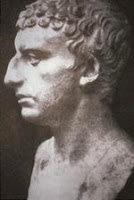
Massechet Yoma, Daf 9  + Throughout Massechet Yoma, we get a glimpse into life with the Beit Hamikdash, the holy Temple, intact. On daf 9, for example, we're told the reasons for the destruction of Jerusalem's holiest place. We read that the first Temple was destroyed because of three cardinal sins - idolatry, adultery and murder. The prophets warn the people of their imminent demise because of these actions - see Jeremiah, chapter 9: "So that I might leave my peopel... for they are all adulterers, a crowd of unfaithful people." The Second Temple, our sages tell us, was destroyed due to unbased hatred among brothers. The Temple authorities were widely perceived as corrupt. Josephus, the first century Jewish historian writing from the Roman court, tells us in his book "The Jewish War" that during the siege of Jerusalem the generals said there's no need to attach the city, the Jews will kill each other..." *** A talented friend and teacher...
Image
Shekalim 21 Up the Down Staircase What a beautiful mishna to finish our posts of Shekalim with! The mishna at the beginning of the eighth chapter tells us that if we find vessels in Jerusalem, near the mikve, are they considered pure or impure? Rabbi Meir answers that it depends on where they are found: דרך ירידה לבית הטבילה, טמאין, ודרך עליה טהורין, שלא כירידתן עלייתן. . . Unlike our current inclination to be machmir about things that are unknown, Rabbi Meir says see what information you have and decide based on that. If the vessels are on their way down to the mikve, then clearly they have not been immersed yet and are impure. And if they are on their way up, they have been purified and you should feel free to use them. The mishna assumes that there are two ways to approach the mikve, one going in and one coming out. The commentators understood the basic principle. The Korban HaEdah explains that there was an entrance and an exit to the mikve so that the impure w...
Image
Shekalim 19 Cleaning House   In the context of the Gemara’s discussion of the שופרות used for donations to the Temple , the subject of King Yehoash’s method of collecting money arises. As we can see in two parallel sources (Melachim Bet 12 and Divrei haYamim Bet24) Yehoash was disappointed in the collections made by the Kohanim for repairs of the Temple , בדק הבית . He and the Kohen Gadol Yehoyada decided to take matters into their own hands and created the first pushke:     מלכים ב יב: י וַיִּקַּח יְהוֹיָדָע הַכֹּהֵן אֲרוֹן אֶחָד וַיִּקֹּב חֹר בְּדַלְתּוֹ וַיִּתֵּן אֹתוֹ אֵצֶל הַמִּזְבֵּחַ בימין (מִיָּמִין) בְּבוֹא-אִישׁ בֵּית יְהוָה וְנָתְנוּ-שָׁמָּה הַכֹּהֲנִים שֹׁמְרֵי הַסַּף אֶת-כָּל-הַכֶּסֶף הַמּוּבָא בֵית-יְהוָה When the box was full, they would empty it out and use it to pay the craftsmen who did repairs in the Temple . Yehoash ruled in the ninth century BCE, he was a contemporary of the prophet Elisha. Archaeological artifacts from that time per...
Image
Shekalim 18   יופי לך מזבח In the discussion of the mishnah about donations to the Temple , the subject of trees arises. The Gemara wants to understand the size of a tree used on the altar. It concludes that the fire on the altar was one cubit ( אמה ) by one cubit and the trees are sized accordingly. In order to understand which altar the Gemara is referring to, we need to take a look at the different sizes of the altars in history. (We are of course referring to the large altar used for sacrifices, not the מזבח הקטורת .) The first altar was the one built in the desert, for the Tabernacle. Its dimensions were rather small: five cubits by five cubits and three cubits high: שמות כז: א וְעָשִׂיתָ אֶת-הַמִּזְבֵּחַ עֲצֵי שִׁטִּים  חָמֵשׁ אַמּוֹת אֹרֶךְ וְחָמֵשׁ אַמּוֹת רֹחַב רָבוּעַ יִהְיֶה הַמִּזְבֵּחַ וְשָׁלֹשׁ אַמּוֹת קֹמָתוֹ When King Solomon built his altar in the First Temple it was considerably larger: twenty cubits by twenty cubits and ten cubits high....
Image
Shekalim 14 Limited Time Only: Wine and Oil for your Sacrifice!   It’s always exciting when an archaeological find fits in with history and literary sources, completing a familiar narrative. The find below could actually work with two different stories, depending on how it is interpreted. At the end of 2011, the excavators from the City of David who had been examining the main sewer system below Robinson’s Arch announced a small but momentous discovery. They had found a small stamp, or perhaps a chit, with Hebrew letters on it: As can clearly be seen, the letters read דכא ליה , not Hebrew but Aramaic. The archaeologists interpreted the words to mean טהור לה' , pure to God, a designation that could apply to many of the items used in the Temple . The oil, wine, meal and other food items all had to be pure if they would be used in the Temple . And since the artifact was found right below the Temple Mount , it stands to reason that it labeled an item used in the s...
Image
Shekalim   All that glitters is Tyrian silver The only Yerushalmi tractate in Daf Yomi puts our blog on familiar ground. The topic is the Temple and its economy, a quintessentially Eretz Yisrael subject. What was the coin used to pay the מחצית השקל and have we found any today? A little background on ancient coins. We all know Abba bought the Had Gadya for 2 zuzim: but what is a zuz and how much is it worth? The smallest coin of value was a פרוטה peruta. Its weight was equal to one barley seed. If something is not even worth a peruta, you cannot make a transaction with it. Perutot are the most common coins found in archaeology, presumably because people did not bother to pick them up. Here is one version of a peruta: There are eight perutot in an  איסר issar and twenty four issarin in a zuz, also called a dinar. If you are still with me, let’s keep on with the math. A shekel is equivalent to two zuzim, the price of Abba’s goat. So half a she...
Image
The Holy City of  . . . Lod? Pesachim 62 A side story on today’s daf seems to have a negative view of the city of Lod . The Gemara reports a conversation between Rabbi Simlai and Rabbi Yochanan where Rabbi Simlai asks Rabbi Yochanan to teach him Sefer Yochsin (Divrei HaYamim). Rabbi Yochanan wants to know where Rabbi Simlai is from and upon hearing that he is from Lod and lives in Nehardea, refuses to teach him. Rabbi Yochanan claims that we do not teach people from Lod and from Nehardea and you are from both those places! Why does Rabbi Yochanan look down on Lod (Nehardea is not in Eretz Yisrael so someone else will have to deal with that question!)? Lod is an ancient city, located in central Israel : We already hear about it in Tanakh, it is in the tribe of Benjamin and is resettled in the time of Ezra and Nehemia. It is centrally located, about a day’s walk from Jerusalem , and on the border between the coast and the Shfelah (lowlands). Lod was known as a we...